

Points and discounts can be a great starting point for a loyalty program, but today’s programs can do much more. Businesses can use customer behavior and purchase data to create more relevant offers, automate engagement, and give customers more reasons to return.
The challenge is keeping all of that activity consistent and easy to manage. An omnichannel marketing approach means engaging customers across multiple channels while keeping their loyalty information, rewards, and experiences connected.
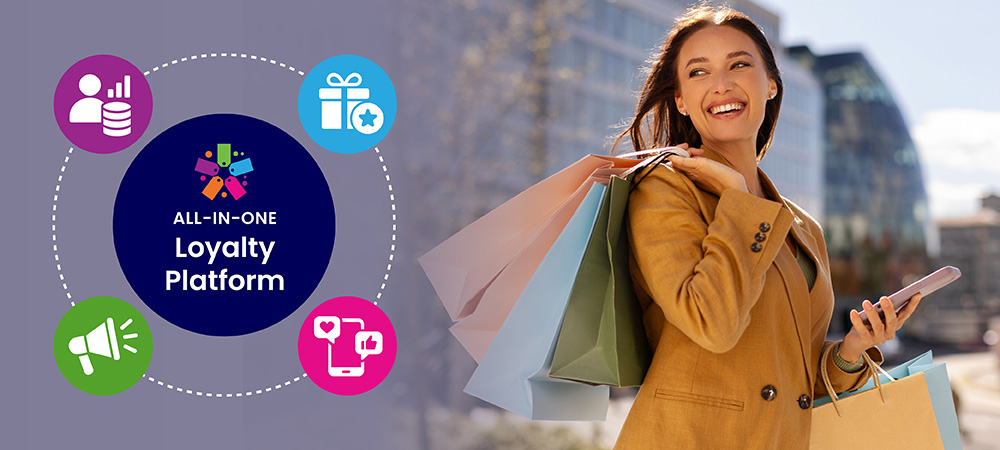
This is where the all-in-one loyalty platform comes in, bringing loyalty management, customer data, rewards, campaigns, and engagement tools together so businesses can manage more of their loyalty program from one place. In this article, we’ll look at what these platforms offer and what to consider when choosing from the top loyalty program providers.
What Is an All-in-One Loyalty Program Platform?
An all-in-one loyalty program platform brings the tools for managing a loyalty program into one system. It combines loyalty management, customer and member profiles, rewards, campaigns, segmentation, and personalization, so businesses don’t have to manage these functions separately.
Why Are Businesses Switching to All-in-One Loyalty Platforms?
Managing loyalty across separate systems can create extra work and make it harder to see the full customer journey.
Common challenges include:
- Fragmented Customer Data: Customer data may be scattered across point-of- sale (POS) systems, ecommerce sites, email platforms, customer relationship management (CRM) software, and loyalty applications.
- Complex Loyalty Management: Managing points, tiers, rewards, expiration rules, and campaigns across different systems can become more difficult as a program grows.
- Increasing Customer Expectations: Customers expect relevant offers and consistent experiences regardless of where they interact with a brand.
- Pressure to Prove Loyalty Program ROI: Teams need to connect program activity with purchases, redemptions, engagement, and revenue to understand what is working and measure the program’s return on investment (ROI).
- Omnichannel Support: Customers may join online, purchase in a store, receive an offer by email, and redeem it through another channel. The loyalty experience needs to follow that journey.
- Operational Efficiency: Fewer disconnected tools can reduce manual work and simplify day-to-day program management.
What Key Features Should You Expect from an All-in-One Loyalty Program Platform?
The right platform should cover the complete loyalty workflow rather than simply track points. It should help businesses manage everything from customer enrollment and rewards to personalized engagement and reporting.
The following capabilities can make the system more useful as the program grows:
Flexible Loyalty Program Management
Look for tools that support different program structures, including points, tiers, bonuses, and other incentives. Program rules should be configurable without requiring extensive technical work.
Centralized Customer and Member Profiles
A centralized member profile should connect customer information with purchase history, program activity, rewards, and loyalty status. This gives businesses a more complete view of each member and their interactions with the brand.
Rewards and Incentive Management
Businesses should be able to create, modify, distribute, and track rewards from one system. The platform should also make it easy to manage redemption rules and reward eligibility.
Customer Segmentation and Personalization
Segmentation lets businesses group customers according to behavior, purchase history, loyalty status, or other attributes. Those segments can then support more relevant offers and communications.
Loyalty Campaign Management
Campaign tools should support promotions tied to specific products, behaviors, occasions, or customer groups. Teams should be able to create and manage campaigns without rebuilding the loyalty program each time.
Marketing Automation
Automation can trigger communications based on customer actions, such as joining the program, earning points, reaching a tier, or becoming inactive. This helps businesses maintain engagement without manually managing every customer interaction.
Omnichannel Loyalty Engagement
Customers should be able to interact with the program across the channels they already use. Consistent balances, rewards, and member information matter when shoppers move between physical and digital channels.
POS and Ecommerce Integrations
When the loyalty program connects with the POS system and ecommerce platform, purchase activity can flow into the member profile automatically. This reduces manual data entry and helps keep rewards, customer information, and engagement activity up to date.
Analytics and Loyalty Program Reporting
Reports don’t have to stop at overall member counts. Look for data on member registration rates, purchase amounts, rewards points earned and redeemed, campaign effectiveness, and other metrics that help show how the program is performing.
Security, Fraud Prevention, and Data Controls
As loyalty platforms store customer information, access controls and data security become important considerations. Businesses should understand what customer information the platform collects, who can access it, how that information is protected, and how data is managed throughout its lifecycle.
How Can a Loyalty Program Platform Improve Loyalty Program Operations?
Centralizing loyalty functions can change more than the technology stack. It can simplify everyday tasks while giving teams a clearer picture of how the program is performing.
- Reduce the Number of Disconnected Tools: Bringing customer data, rewards, campaigns, and reporting together reduces the need to move information between separate systems.
- Create a Unified Customer Experience: Members can receive consistent loyalty benefits across stores, websites, and other channels instead of encountering different rules or reward balances.
- Improve Marketing Efficiency: Segmentation and automation allow teams to build targeted campaigns without manually managing every customer
- Make Data-Driven Decisions: Centralized reporting gives teams the information they need to understand member behavior, evaluate campaign performance, and adjust program rules.
- Scale the Loyalty Program More Easily: A platform built for growth can support more locations, customer segments, rewards, campaigns, and integrations without requiring a completely new technology stack.
What Does the Customer Experience Look Like with an All-in-One Loyalty Platform?
The customer journey should feel simple even when the technology behind it is complex. An integrated platform connects each interaction so the customer can move from enrollment to repeat purchases without losing their loyalty status or benefits.
Step 1: Customer Joins the Program
The customer signs up through a store, website, app, or another supported channel. Their member profile is created in the loyalty platform, giving the business a place to track their program activity.
Step 2: Customer Makes a Purchase
The purchase is connected to the member profile, allowing the platform to apply the appropriate earning rules and update the customer’s loyalty activity.
Step 3: Customer Receives Personalized Engagement
Based on customer activity, the platform can trigger relevant offers, reminders, or other communications.
For example, a business could send an offer based on a customer’s purchase behavior or reconnect with a member who has become inactive.
Step 4: Customer Earns Rewards or Reaches a New Tier
As the customer meets program requirements, their points, status, or tier can be updated automatically. This gives customers a clear reason to stay engaged and continue participating in the program.
Step 5: Customer Redeems a Reward
The customer uses an eligible reward through a supported channel. The platform records the redemption and updates the member’s account.
Step 6: Platform Continues the Customer Journey
The customer’s latest activity becomes another signal for future segmentation, campaigns, rewards, and engagement. Instead of treating each interaction as a separate event, the platform can use that activity to continue building the customer relationship.
How Do You Choose the Right All-in-One Loyalty Program Platform?
Not every loyalty platform offers the same level of flexibility or integration. The right fit depends on your current systems, program goals, customer experience, and plans for future growth.
When comparing options, consider:
- Program Flexibility: Make sure the platform can support the loyalty structure and reward rules you need today while leaving room for new program models as your business grows.
- Integration Capabilities: Check whether it connects with your POS, ecommerce platform, CRM, marketing tools, and other systems your business already uses.
- Personalization: Look for segmentation and customer data capabilities that allow offers and experiences to reflect actual member behavior.
- Automation: Review the triggers, workflows, and campaign actions available without requiring constant manual intervention.
- Reporting and Analytics: Verify that reporting covers the metrics you need to understand engagement, redemptions, sales activity, campaign performance, and overall program results.
- Scalability: Consider whether the platform can support more members, locations, campaigns, and channels as the business grows.
- Total Cost of Ownership: Don’t evaluate costs based solely on the subscription price. Consider costs such as implementation, integration, maintenance, training, and the internal labor required to manage the platform.
Conclusion
An all-in-one loyalty program platform has more capabilities than tracking loyalty points and rewards. An ideal platform brings together customer profiles, rewards, offers, campaigns, personalization, automation, engagement, integrations, reporting, and security under one operating environment.
The platform’s potential benefits include consolidated tools, an enhanced customer experience, more efficient loyalty marketing operations, and better data insights for strategic decisions. When expanding a company’s loyalty program, evaluating the platform’s full capabilities can be more valuable than selecting software based solely on rewards management.

