

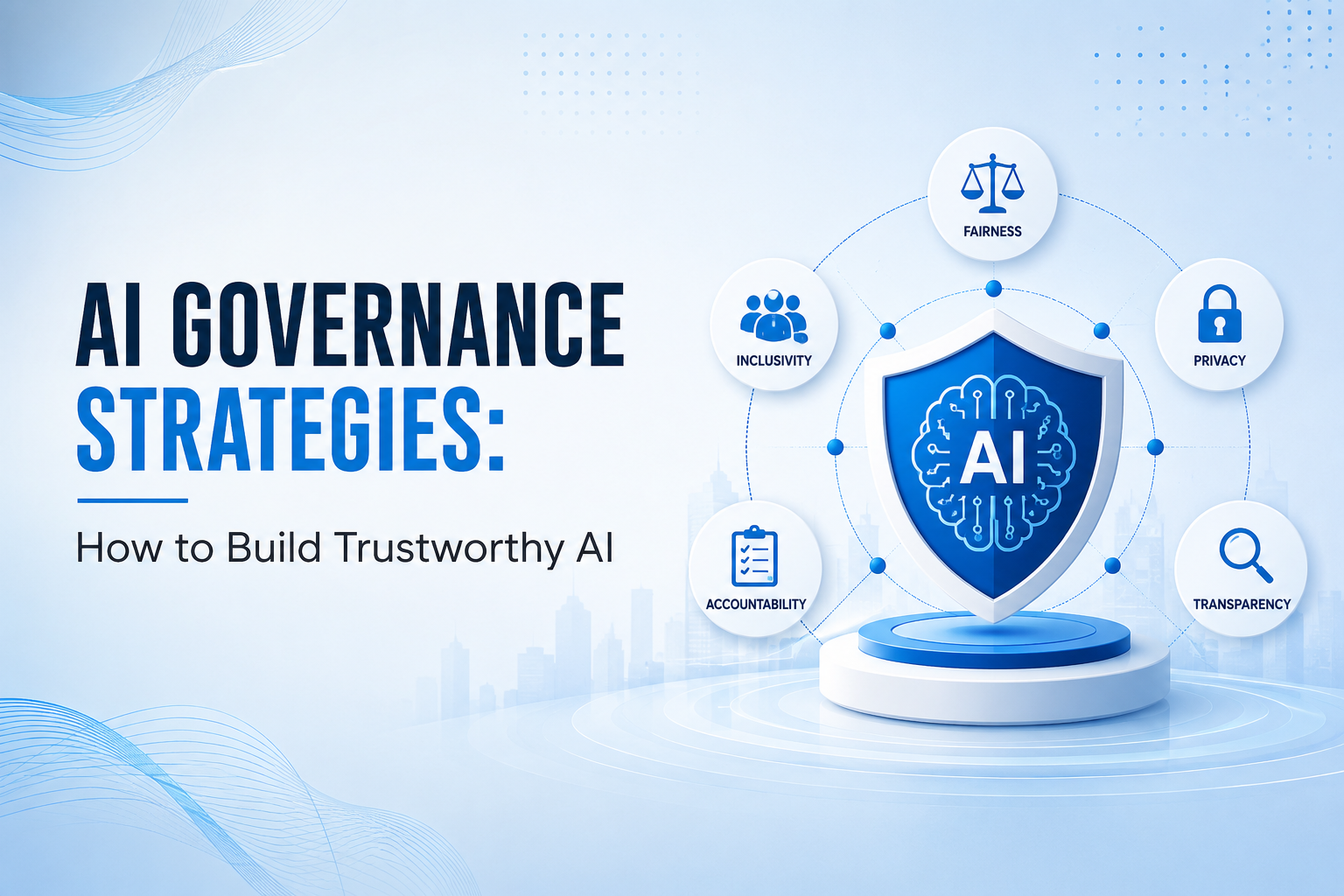
AI can write code, spot fraud, and answer customer emails in seconds now. Speed gets all the attention. Trust usually gets ignored until something breaks.
AI Governance and Consulting deals with exactly that gap. Not a fancy label, just rules, checks, and habits that stop AI systems from going off track.
How Trustworthy AI Looks Like
Trustworthy AI is not just about smart technology. It also treats different groups of people fairly, without favouring anyone. It keeps private data locked down. And it holds up as conditions around it shift.
Take a hiring tool that quietly rejects resumes from certain zip codes more often. Faster screening does not make that okay. Same goes for a chatbot leaking customer emails, no matter how sharp its replies sound.
None of this is about vibes. Bias can be tested. Data access can be audited. Accuracy drift can be tracked month by month, with numbers to back it up.
Good Intentions Run Out Fast
Almost nobody sets out to build an unfair AI tool. Teams build quickly, launch early, and hope the rough edges smooth themselves out. Usually, they don’t.
AI models learn from whatever data they’re fed, and old data drags old mistakes along with it. Skip the checks, and a model can repeat those mistakes thousands of times before anyone notices.
Good intentions won’t stop a biased loan model from rejecting 10,000 applications. A governance process, run properly, can.
What Skipping Governance Actually Costs
Cutting corners on oversight looks cheap right up until a model makes a bad call in front of everyone.
| Without Governance | With Governance |
|---|---|
| Bias shows up after complaints pile in | Bias gets tested before launch |
| Breaches get traced slowly, after the fact | Access logs are ready for review anytime |
| Regulators step in with fines | Compliance is built into the design |
| Trust takes years to rebuild | Trust holds from the start |
| Fixes cost roughly 10x more post-launch | Fixes happen during the design phase |
That last line is the one worth sitting with. IBM’s Systems Sciences Institute has pointed out that fixing a defect after release can run up to 100 times the cost of catching it early. AI mistakes tend to follow the same math, just faster.
Four Pillars Hold Up Real Governance
Solid ai governance solutions come down to four pillars, and skipping even one leaves the whole thing wobbly.
- Data Governance Track where training data comes from. Look for gaps, bias, and stale records before any model touches it.
- Model Oversight Test before launch, then keep testing. A model that behaved in January can drift badly by June.
- Human Accountability gives every AI decision a real owner, a person, not a department. The algorithm did n’t fly with regulators.
- Transparency and Documentation Keep a plain-language data of, what the model does, what data it uses, and how it reaches decisions. Auditors will ask for this. Customers will too, sooner or later.
Plenty of companies get good at one pillar and drop the rest. A bank might document everything on paper but never run a bias test. A startup might test once, then forget documentation entirely. Either way, the system doesn’t hold up once someone digs in.
Where AI Consulting Services Actually Help
Building all of this alone is genuinely hard. Internal teams usually know their product inside out, but they’ve rarely run a fairness audit or written a model risk policy from scratch.
AI Consulting Services exist for that exact reason. An outside consultant brings frameworks already tested across other industries, which saves a company months of figuring it out the hard way.
A decent AI consultation generally covers:
- Mapping data flows to find where private information sits exposed
- Writing governance policies sized to the business’s actual risk level
- Training internal staff to run these checks on their own later
- Setting up monitoring so problems surface early, not after a lawsuit lands
Artificial intelligence consulting isn’t something you do once and forget. Laws shift, markets shift, models drift on their own. A solid consulting partner leaves behind a system the internal team can keep running long after the engagement ends.
A Lending Company Learns This the Hard Way
A mid-sized lender rolled out an AI model to speed up loan approvals. Approval time dropped from three days to four hours. Leadership called it a win.
Six months later, an internal review turned up something ugly: the model approved loans for one demographic group at a noticeably lower rate, even after adjusting for credit score. Nobody had built in a bias check before launch, so nobody caught it early.
The company brought in outside AI governance services to untangle the mess. Nothing glamorous about it re-auditing training data, adding a fairness test before every model update, assigning a compliance officer to review flagged decisions each week.
Approval speed slipped a little, four hours became closer to six. But the bias gap closed within two review cycles, complaints dropped, and the company sidestepped a regulatory investigation that hit a competitor over a similar issue that same year.
Speed without governance wins short term. Governance without speed is safer but slower to show results. This lender learned the balance the hard way and now runs both checks side by side.
Mistakes That Keep Repeating
Even companies with plenty of funding stumble into the same traps.
- Treating governance as a launch-day checkbox rather than something ongoing
- Writing policies with no enforcement behind them
- Overlooking smaller tools, like internal chatbots, on the assumption only customer-facing AI matters
- Skipping documentation because it feels slow, then scrambling once regulators come asking
- Copy-pasting another company’s policy without adjusting for their own actual risk
Each mistake looks small on its own. Stack a few together, though, and the whole system looks fine right up until it fails in public.
Who Actually Owns Governance Inside a Company
Governance stalls fast when nobody’s clearly responsible for it. Spread the job across five departments and, somehow, nothing gets done at all.
A setup that tends to work:
| Role | Responsibility |
|---|---|
| Executive Sponsor | Approves budget, sets risk tolerance |
| Governance Lead | Runs audits, owns documentation |
| Legal or Compliance | Checks against local and industry rules |
| Engineering Lead | Fixes issues flagged during review |
Smaller teams often merge two or three of these roles into one person. Fine, as long as somebody genuinely owns it.
How Often Reviews Should Happen
Checking an AI system once a year isn’t enough anymore, not with how fast models drift as new data flows in.
A schedule that holds up in practice: monthly reviews for high-risk models like lending or hiring tools, quarterly for lower-risk internal ones. Any major model update should trigger a review right away, not wait for the calendar.
Plenty of teams skip this, treating it as extra work with no obvious payoff — until the first time a review catches a problem before a customer does.
Where to Actually Start
No company needs a five-year roadmap to start earning trust in its AI. One honest audit of what’s already running gets the ball moving.
Begin by listing every AI tool currently in use, including the small, easy-to-forget ones. Run each against the four pillars above. Gaps tend to surface fast, and that list becomes a rough governance roadmap on its own.
From there, decide who owns this internally, and whether bringing in outside AI Governance and Consulting support makes sense for that first audit. Plenty of companies lean on outside help for the initial pass, then take reviews in-house afterward.
Trustworthy AI isn’t a thing you build once. It gets checked, adjusted, rebuilt as both the technology and the business change shape. The companies that treat governance as ongoing work, not a box to tick, tend to be the ones customers stick with.
Author Bio:
Emily is a content writer specializing in mobile apps and software development. With a keen interest in educating others, she crafts insightful content on mobile, software, and web development. His passion for writing helps keep readers informed about the latest trends in the tech industry. Hoping to provide valuable and engaging content for the readers.

